
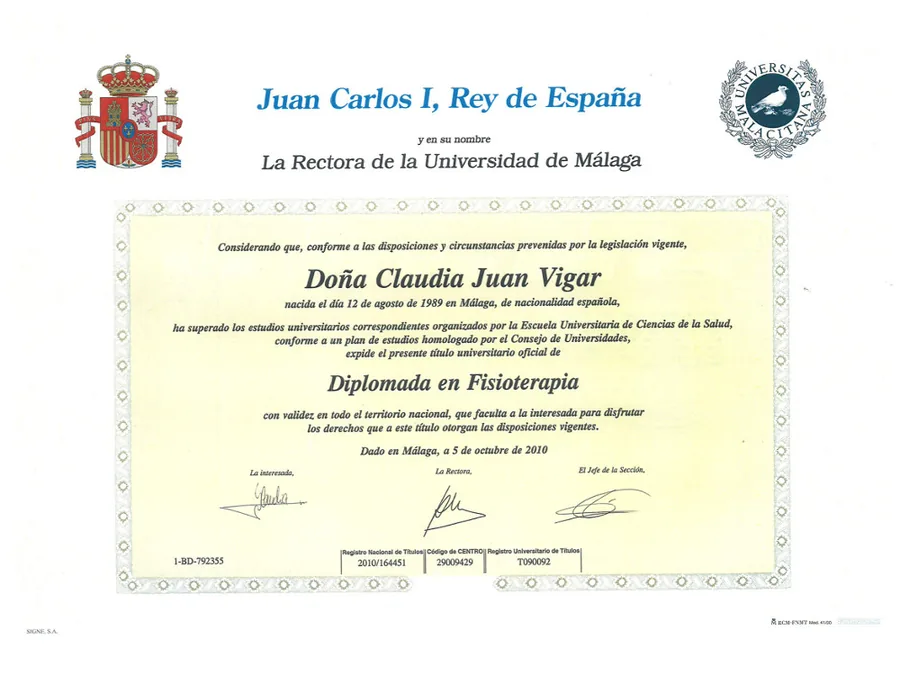
Degree in Physiotherapy
University of Málaga.
Clínica Vigar is a physiotherapy practice in Málaga led by Claudia J. Vigar, physiotherapist for the Spanish Olympic Sailing Team at Paris 2024. We treat all areas of the body, with a particular focus on shoulder, neck and back conditions. Each case starts with detailed assessment and a clear treatment plan, combining hands-on techniques, ultrasound-guided procedures and structured exercise-based rehabilitation.
Sports background: physiotherapist for the Spanish Olympic Sailing Team at Paris 2024 and former high-performance sailing athlete.
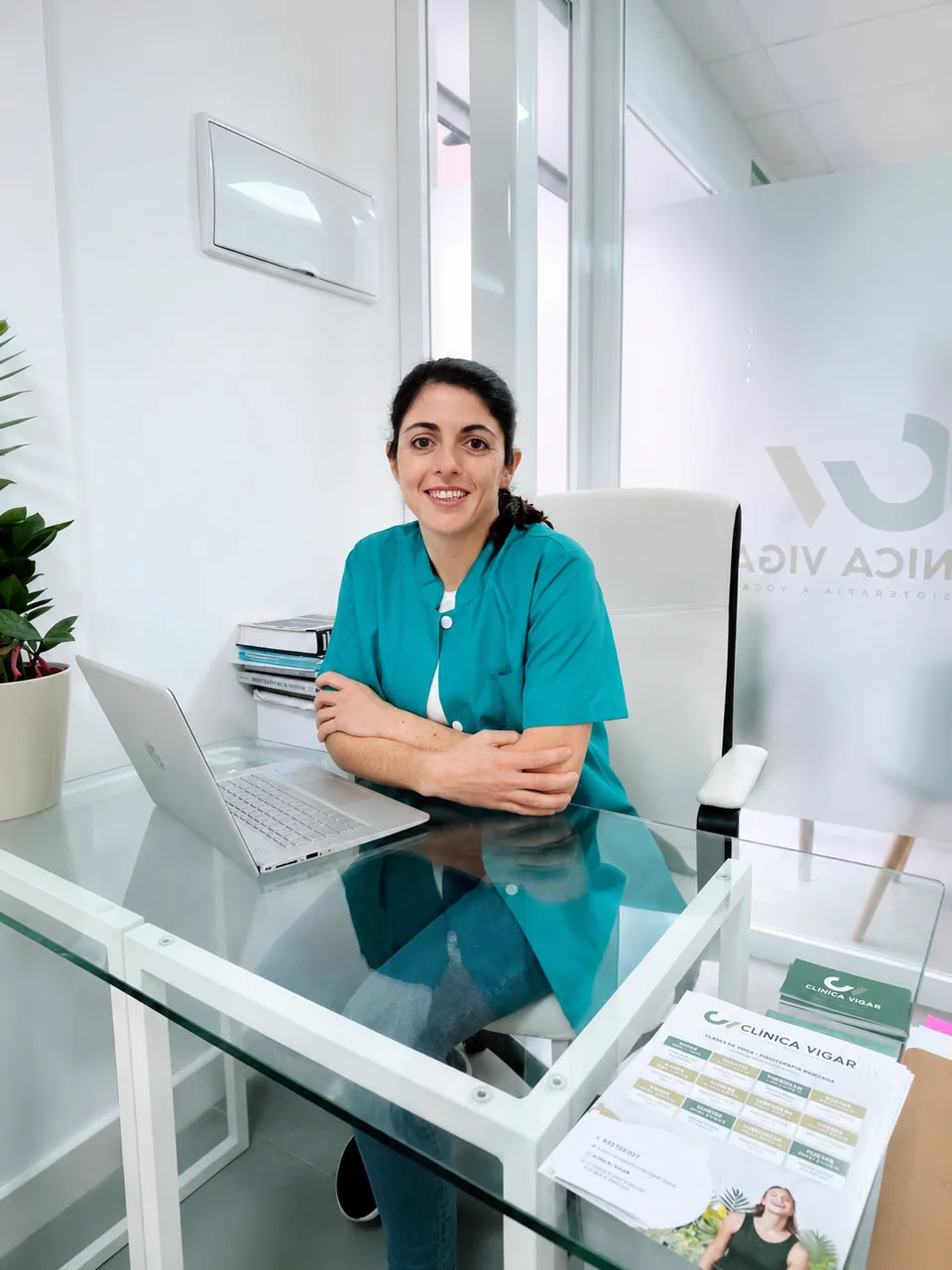
Each case is understood through detailed assessment, clear explanation and a treatment plan adapted to the person.Meet Claudia →
University of Málaga.
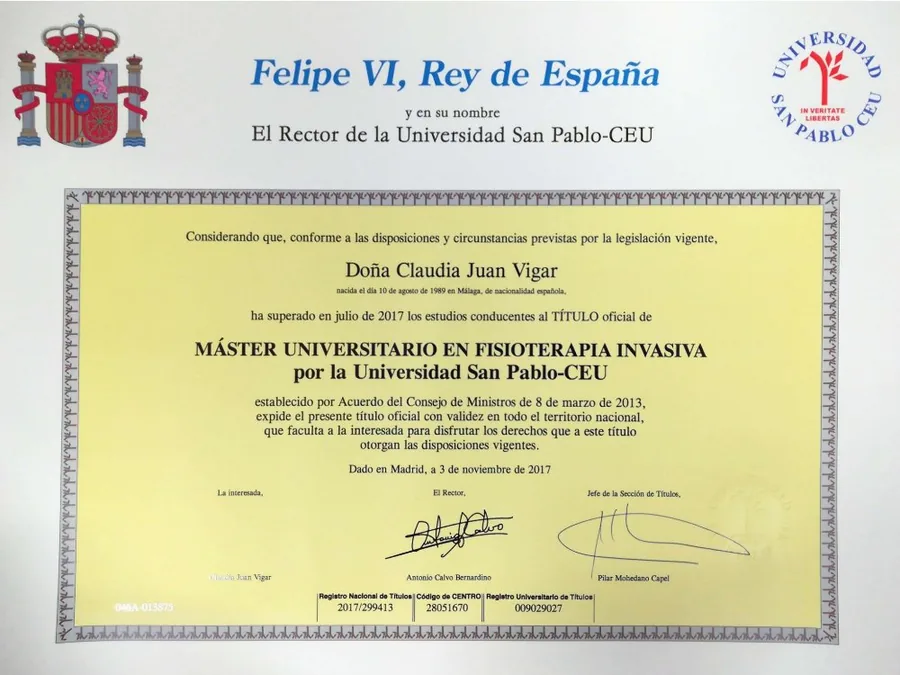
Universidad San Pablo-CEU.
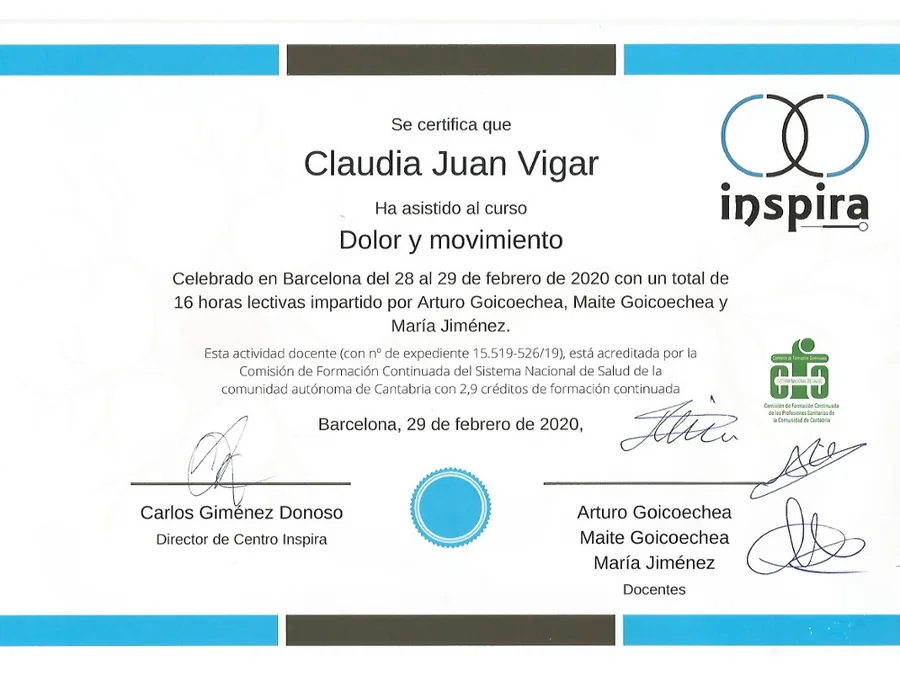
Specific training in pain and movement.
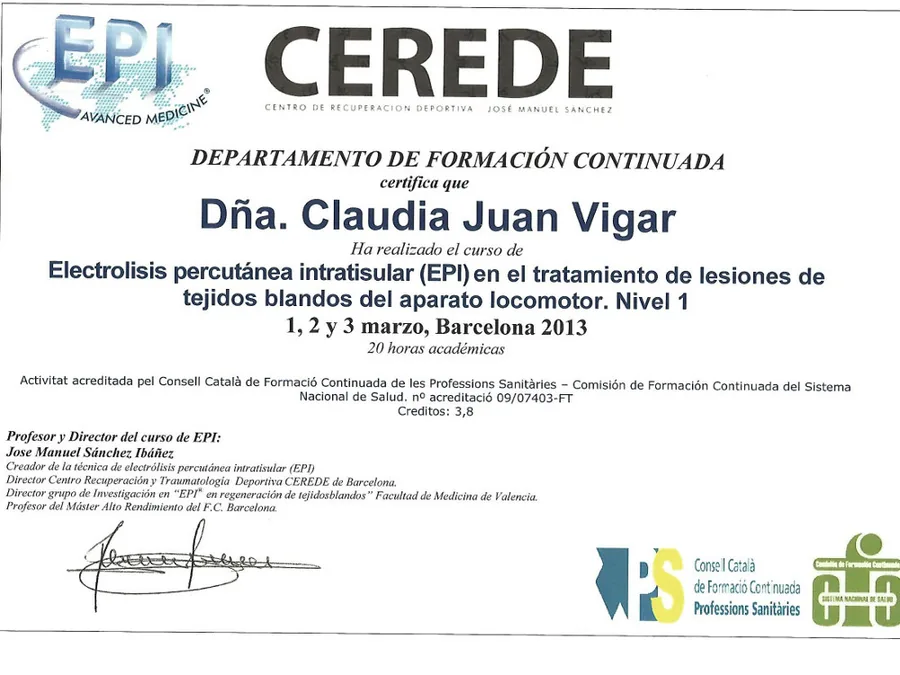
Treatment of soft-tissue injuries in the musculoskeletal system.
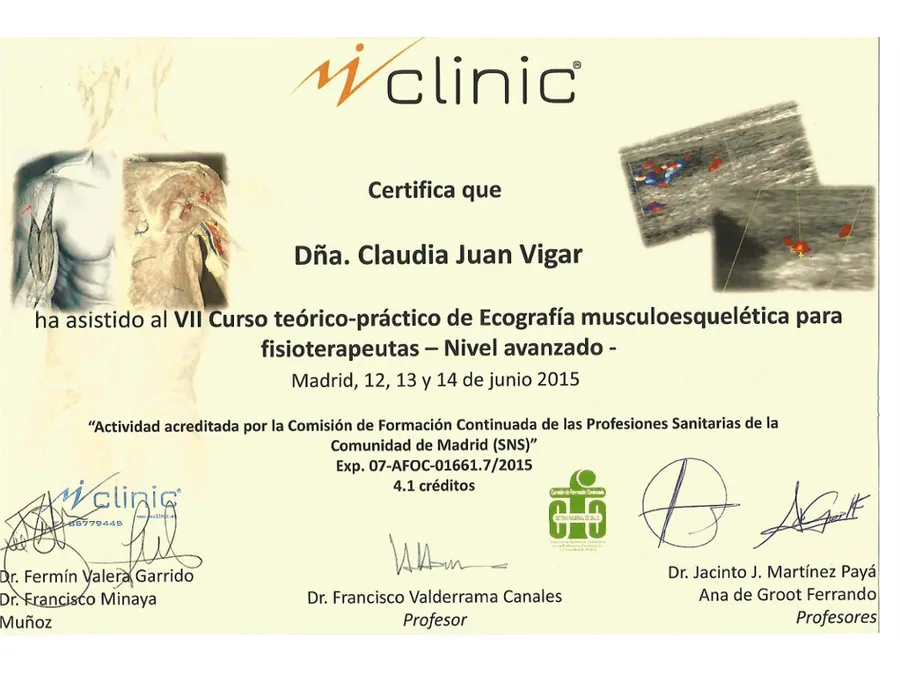
7th theoretical-practical course for physiotherapists.
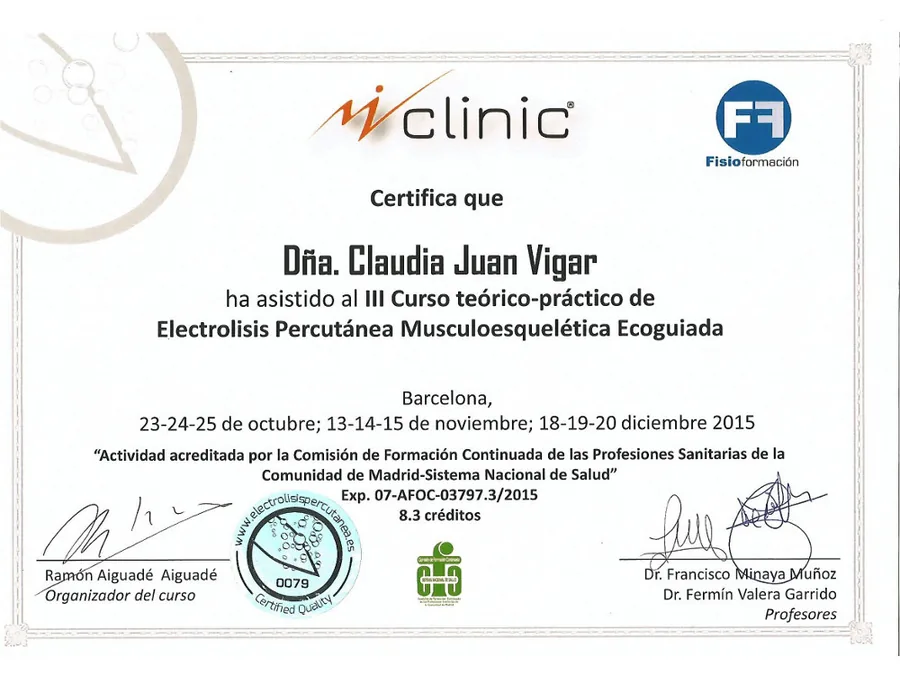
3rd theoretical-practical course.
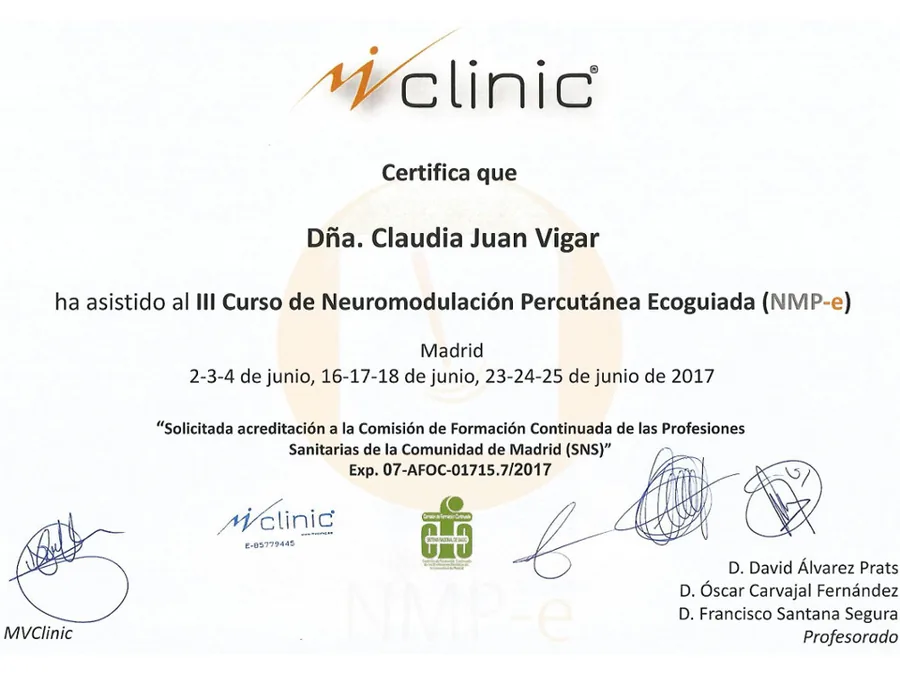
3rd ultrasound-guided percutaneous neuromodulation course.
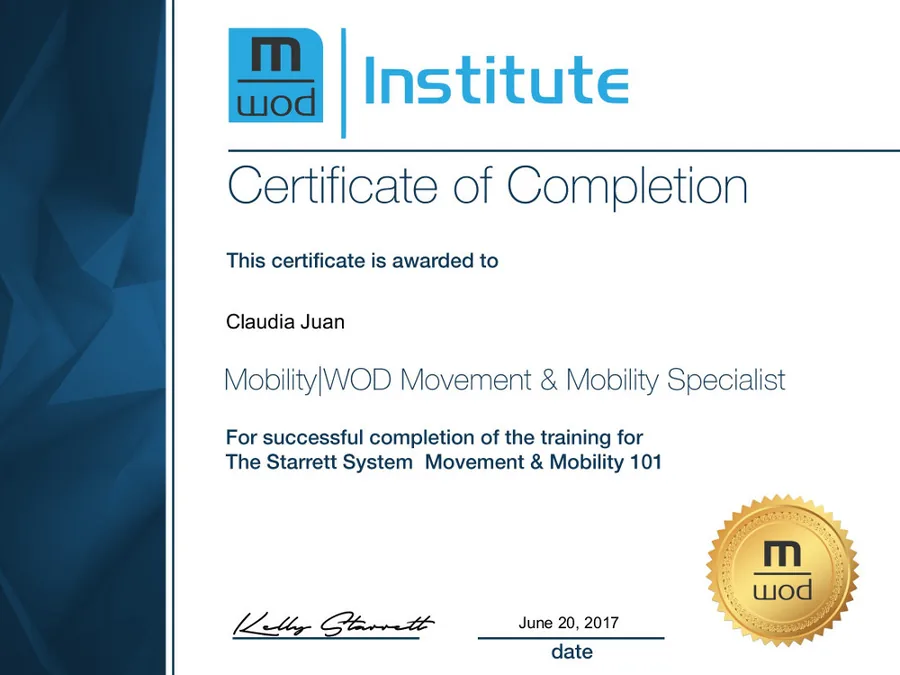
Movement and mobility specialist certificate.
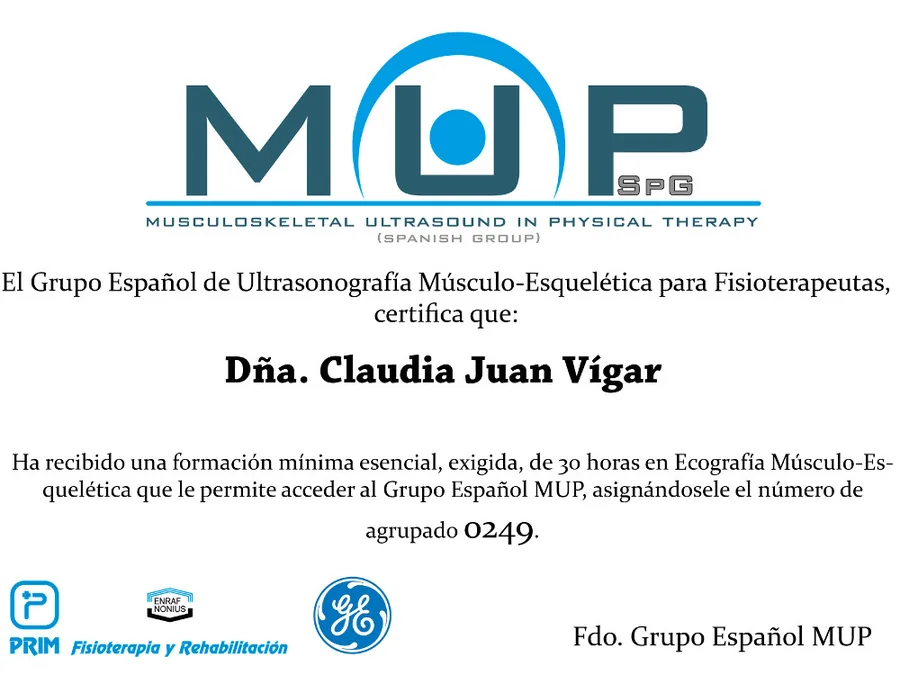
Claudia Juan Vigar is part of the Spanish MUP Group.
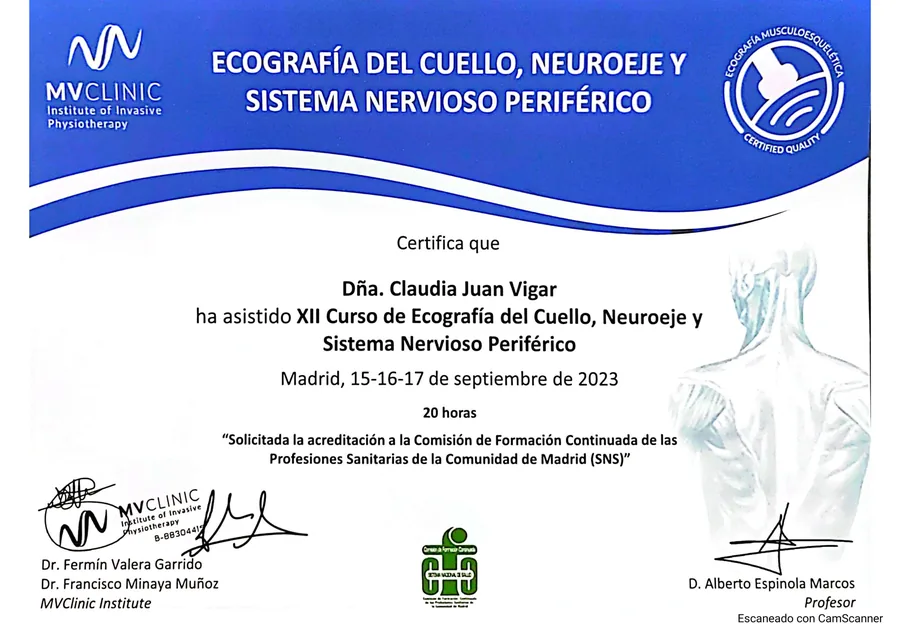
Specific advanced ultrasound course.
Four principles guide every case, from the first visit to discharge.
A good assessment saves sessions. Before proposing a plan, we take time to understand what is happening, what influences it and what should come first.
We work on the real cause with evidence-informed techniques: ultrasound-guided EPI, percutaneous neuromodulation, manual therapy and ultrasound as diagnostic support.
Treatment does not end on the table. Each patient leaves with active work: video exercises, clear guidelines and reviews to maintain change.
The goal is that you understand your case and can manage it independently. Programmes include review and progression; isolated sessions do not.
Spanish physiotherapy training places strong emphasis on detailed musculoskeletal assessment and on advanced techniques for soft tissue, tendon and ligament injuries. At Clínica Vigar we use approaches developed and refined within this clinical tradition, including ultrasound-guided dry needling, percutaneous neuromodulation and EPI (Intratissue Percutaneous Electrolysis), originally developed in Spain in 2000. These are combined with structured, exercise-based rehabilitation.
A clinical focus on shoulder, neck and back, with the same detailed assessment and a programme-based approach applied to all areas.
Musculoskeletal ultrasound is used when it helps decision-making, not as a routine step.
Treatment is organised as a process: goals, reviews and progression adapted to each case.
You leave with a concrete understanding of what seems to be happening and what to do first.
We prioritise what is useful, separate what is secondary and work on what truly influences each case.
The goal is that you understand your case and can sustain progress over time.